
Readiness is a standing cost, and utilization decides whether it pays
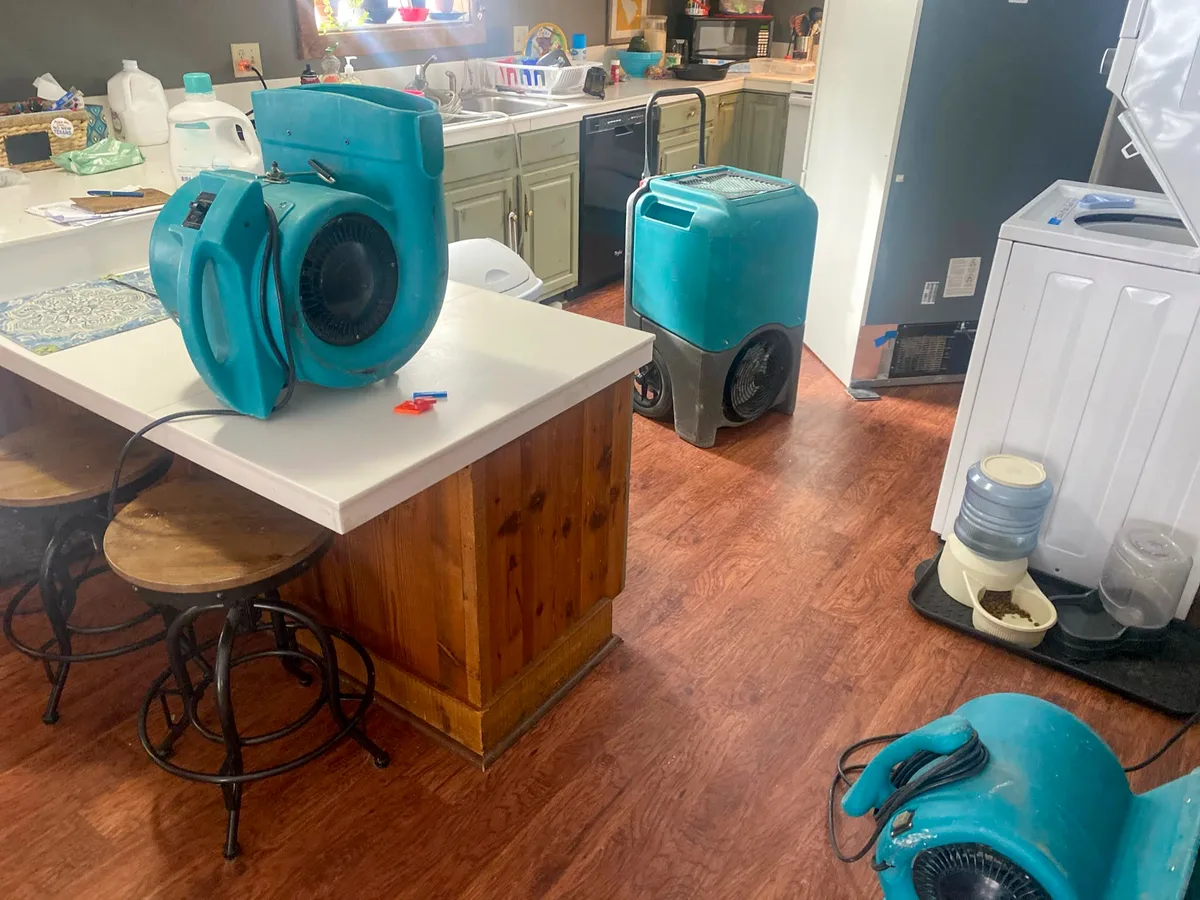
Unlike a trade that chooses whether to answer the phone at night, a restoration firm sells the answering itself. The on-call rotation, the fuelled and stocked response vehicles, the charged equipment staged by the door: all of it costs money in the weeks nothing burns or floods, and every deployed job has to carry a share of those quiet weeks. We compute that standing cost as its own monthly line, then divide it across deployments, so the real margin on a loss includes the price of having been ready for it.
The same lens sizes the fleet. Deployment days per air mover and per dehumidifier, pulled from your own job records, tell you whether the warehouse holds too little capacity for the work you win or too much for the work that exists. Capacity decisions stop being gut calls about the next storm and start being arithmetic about the last hundred claims.
What a program agreement actually earns
Managed-repair programs deliver volume, and they charge for it in ways that never appear as one line: file fees, platform pricing you cannot vary, documentation standards that add unbillable hours, scorecards that punish slow cycle times with fewer assignments. Direct work earns more per file and costs more to win. A CFO's job is to hold the two side by side, per completed claim, and let the mix be chosen on purpose.
| Question | Program work | Direct work |
|---|---|---|
| Who sets the price | The platform's line rates, audited per item | Your estimate, negotiated with the owner |
| Cost of winning it | File fees and scorecard compliance | Marketing, referral relationships, response speed |
| Cash timing | Settlement after review, on the program's clock | Deposits and progress payments you control |
| Volume risk | One administrator's decision can empty the pipeline | Diversified, but never guaranteed |
Concentration is the quiet risk in the program column. When one carrier relationship feeds most of the revenue, a scorecard dip or a network reshuffle is an existential event, so we track revenue share by program the way a lender would, and set a ceiling worth defending.
Finance the gap between response and settlement on purpose
Every claim runs the same cash race: payroll and rented equipment paid within days, the deductible collected if discipline held, then a settlement that lands only after estimate review, on a timeline you do not control. Multiply that gap by every open file and you get the working capital the business permanently consumes. We model it explicitly, months of payroll sitting inside WIP and receivables at any moment, and size the operating line to that number instead of to a bad week's panic.
The model also prices growth honestly. Taking on another program's territory means funding more claims through the same gap, and the forecast shows whether the balance sheet can carry the expansion before the agreement is signed. Walla Assaf's decade in banking and corporate finance shapes how that file is built, because the case for a bigger line is won with the lender's own arithmetic. When the ask is ready, Business Financing Advisory takes it to the table.
The monthly numbers a restoration firm should see
- Margin per completed claim, split by loss type and by program versus direct.
- Readiness cost per month and the share each deployment absorbed.
- Equipment utilization: deployment days per unit against the cost of holding it.
- Receivable days by carrier and program, with the files past stated terms named.
- Revenue concentration by program, watched against the ceiling you chose.
- Cash coverage: the weeks of payroll the line and the bank can carry at current WIP.
None of this needs new software; it comes from the job files and clean books you already keep, reviewed in a monthly working session where the decisions actually get made: the next program, the next hire, the next pallet of dehumidifiers.
Fractional, because the need is real but not full-time
Our Fractional CFO service runs that rhythm for restoration firms across Mississauga and the GTA: the readiness math, the program mix, the cash model and the lender file, without the salary a full-time CFO commands. The books that feed it can come from our End-to-End Accounting engagement or from the bookkeeper you already trust. Scope and fee are quoted in writing after a free 15-minute discovery call, so the first number you see from us is a firm one.
