
One loss, two jobs, one claim number
A water loss opens as an emergency and closes as a construction project, and the books have to hold both. Mitigation runs on rapid authorization: extraction, demolition, drying, priced from the Xactimate or Symbility line items the carrier's program requires. The rebuild is a separate scope, negotiated later, often approved weeks after the fans came home. We set up every claim number with a mitigation job and a rebuild job underneath it, each carrying its own labour, subtrade, materials and equipment lines, because the two halves earn different margins on different clocks.
The paper trail already lives in your field tools. Job documentation from Encircle or DASH, estimate exports and the supplier invoices Dext captures all land in QuickBooks Online against the right claim, so the file the adjuster reads and the file the ledger holds are the same file. Gross margin by claim, by loss type and by program becomes a report you pull, not a spreadsheet rebuilt after the fact.
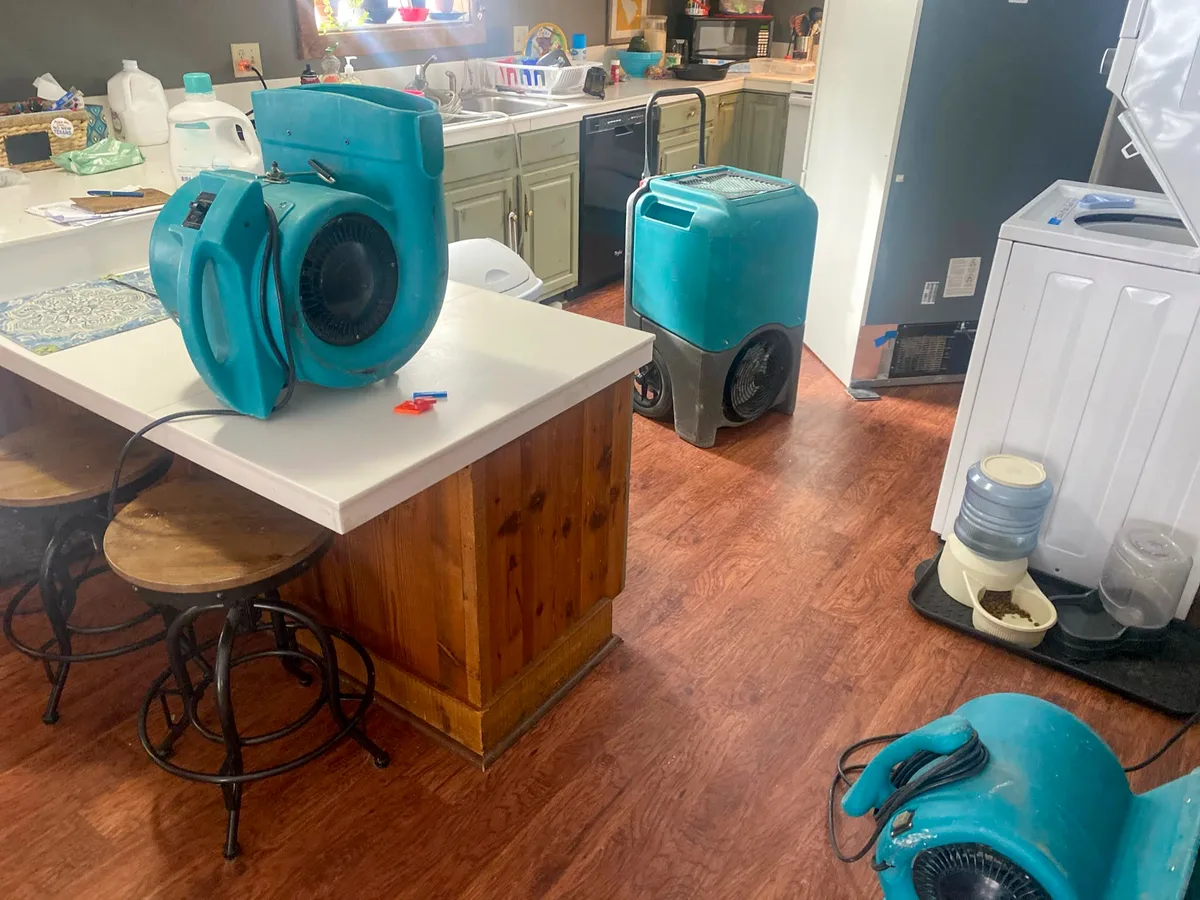
The drying fleet is a revenue line, so we book it like one
Air movers, dehumidifiers and air scrubbers bill to the claim per unit per day at platform rates, which means an owned fleet is a rental business hiding inside a contracting company. We book equipment charges as their own revenue line on every claim, matched against the cost of owning, maintaining and moving the gear, so you can see what the fleet earned this month rather than only what it cost to buy.
Two leaks get watched. Equipment rented in for a surge has to be rebilled to the claims that used it, or the rental house's invoice quietly eats the file's margin. And a dehumidifier that never returns from demobilization is a write-off nobody recorded; deployment logs reconciled against the asset register catch it while the trail is warm. What the fleet means for the tax return, class by class, is planning work we handle on a separate page of the same engagement.
Three payers on one invoice
A single residential claim can collect money from three directions on three clocks, and a receivable total that blends them means nothing. The ledger keeps each balance visible on its own.
| Payer | When the money arrives | What the books must show |
|---|---|---|
| Carrier settlement | After line-item review, often weeks past completion | Receivable aged by carrier, every short-pay coded to the disputed line |
| Program administrator | Netted for file fees before it lands | Gross revenue and the fee as separate lines, never a mystery discount |
| Homeowner | Deductible at authorization; upgrades on completion | Deductible receipted against the claim; non-covered work invoiced on its own |
Deductible collection is a discipline, not an afterthought: taken at work authorization where the program allows it, chased on a schedule where it was not, and never buried inside the settlement receivable. When the aging runs by payer, the morning question of who owes us what has an answer.
The work starts before the approval, so WIP runs per claim file
Crews extract water at 2 a.m. on a verbal go-ahead; the estimate is written later and the settlement lands later still. Between those dates, labour, sublet abatement and equipment days are real costs with no matching revenue, and a month-end that ignores them swings profit around for no reason. We hold work in process by claim file: spent, billed and still unbilled, on every open loss.
The same schedule exposes the lag between emergency response and settlement. Files sitting unbilled because the drying logs are incomplete, or billed and unpaid past a program's stated terms, show up by claim number, which turns a vague cash worry into a collections list with names on it.
A 24/7 roster is a payroll problem before it is anything else
On-call premiums, callout minimums and overtime past 44 hours in a week under Ontario's Employment Standards Act all ride into the pay run, with CPP, EI, vacation pay and WSIB premiums stacked on top. We run payroll inside the engagement, remit source deductions on time, and cost after-hours labour at its loaded rate against the claims it served, so emergency work carries its true price instead of flattering the margin.
All of it sits inside End-to-End Accounting: bookkeeping, payroll, financial reporting and tax filing under one roof. HST runs at 13% on every invoice whether a carrier or a homeowner funds it, input tax credits come from reconciled supplier records, and year-end flows straight into Corporate Tax Filing with no clean-up project attached. We work with restoration firms across Mississauga and the GTA, and every engagement starts with a free 15-minute discovery call and a written quote.
