
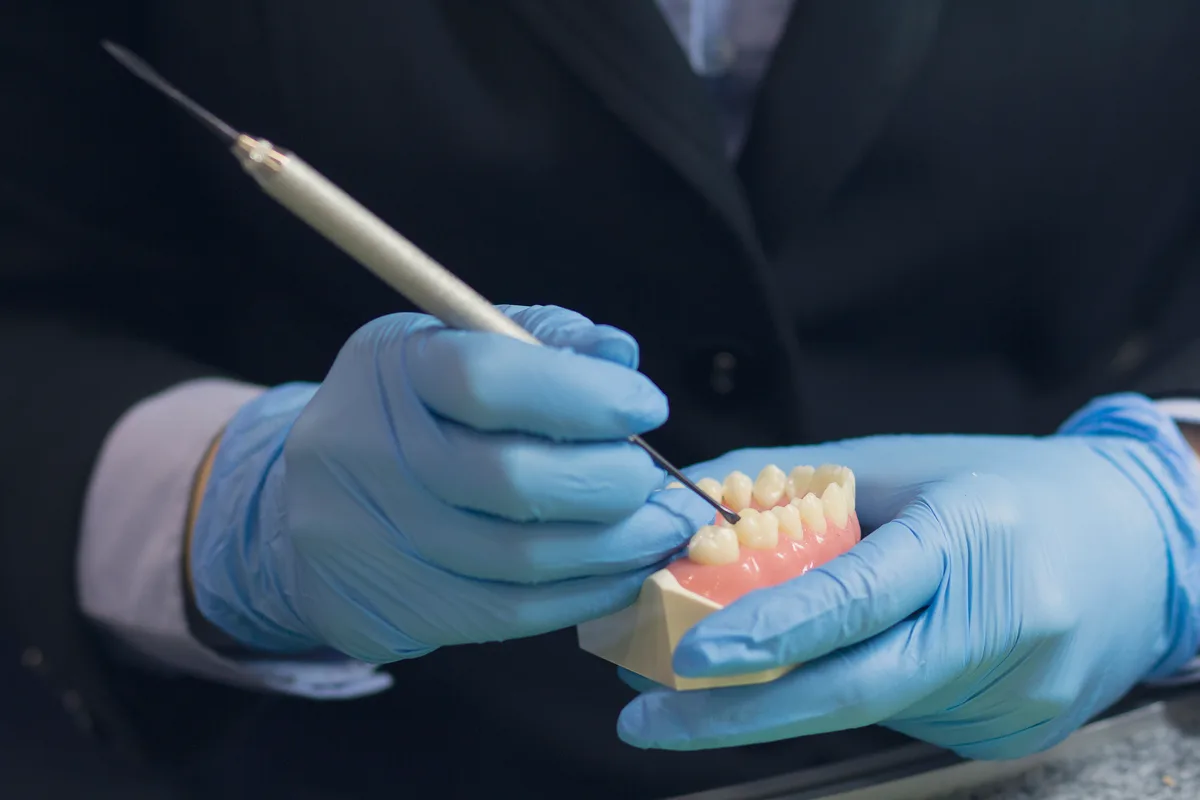
One arch, five appointments, two payments
A complete denture moves through consultation, impressions, bite registration, try-in and insertion, and the money usually arrives twice: a deposit when the case starts and the balance when it is delivered. Between those two payments you have bought the teeth card and the acrylic, and your bench has put hours into a case that is not yet revenue.
Book deposits as income on receipt and the picture bends. A month where six cases start looks strong even though nothing was delivered, and the material cost lands weeks away from the revenue it belongs to. We carry deposits as a liability until insertion, so income shows up with the finished case and the cost that built it. When an insurer is paying by assignment, the case stays open until both the patient portion and the insurer portion are in, not when the chair visit ends.
Private pay, insurers and ODSP: three ways to get paid
Most clinics run three or four payer streams at once, and each one needs different bookkeeping to stay honest:
| Payer | What the books must track |
|---|---|
| Private pay | Deposit and balance per case; the simplest stream, and the benchmark the others get measured against |
| Insurers on assignment | Predeterminations, the explanation-of-benefits behind each deposit, partial coverage, and the patient balance still owing |
| ODSP | Prior approvals, billing on the program's fee schedule, and payment timing that runs slower than chairside |
| CDCP | Claims through Sun Life on the federal plan's grid, reconciled line by line against what was submitted |
The discipline is reconciliation: every bank deposit tied back to the statement that explains it, receivables aged by payer, and any gap between your fee and what a program paid recorded as an explicit write-off rather than quietly netted away. That is also how you learn, with numbers, which payer is worth more of your schedule.
Teeth cards, acrylic and the cost of a case
The lab side of the clinic is a materials business. Teeth are bought by mould and shade and sit in a drawer until a case calls for them; acrylic, impression material and flasks arrive on supplier statements that mix consumables with the occasional piece of equipment. Two habits keep this side truthful:
- A year-end count. Teeth cards and acrylic on hand are inventory, not an expense. Skipping the count quietly moves profit between years and misstates the cost of what you actually delivered.
- Equipment out of the supplies line. A curing unit, an articulator or a new 3D printer belongs on the asset schedule with its own CCA life, not buried in repairs and materials where it distorts a month.
Tag material cost to cases and the reporting starts saying useful things: what a full arch costs you to build versus a reline, and how much of a busy month was quick-service repair work at a very different margin.
An HST file that works in reverse
Dentures are zero-rated, so the clinic charges no HST while the 13% on rent, materials and equipment is recoverable as input tax credits. That makes your HST return a claim, not a bill, and a claim needs paperwork: we capture every supplier invoice through Dext as it arrives, so the refund is complete and each credit has a document behind it when the CRA asks to see one. The filing strategy itself lives with your tax work; the books are what make it painless.
One engagement, sized for a small clinic
Our End-to-End Accounting engagement runs the whole cycle monthly: receipts and payer statements in through Dext, cases posted in QuickBooks Online, the front desk's payroll remitted on time, and quarterly numbers you can read between patients. Year-end stops being a project, because the corporate tax filing falls out of books that were right all year.
A solo denturist a few years out of George Brown often needs answers more than monthly service. CPA Quick Support at $99/month covers that stage: unlimited questions, three topics a month and CRA letter review from a Mississauga CPA firm working with clinics across the GTA. When the case volume grows, the books graduate with you.
