
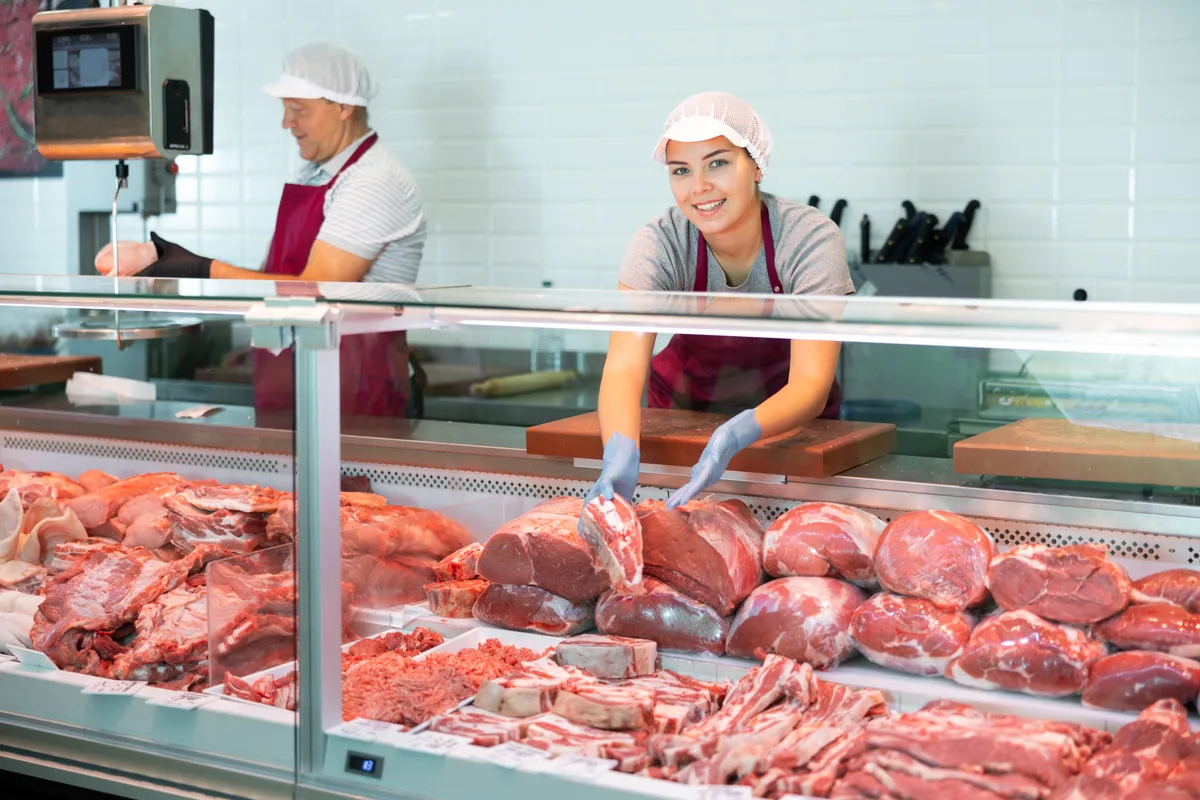
One invoice price, thirty selling prices
A hip of beef arrives with a single landed cost and leaves the case as roasts, steaks, stir-fry, kabobs and grind, each at its own price per kilogram. Between those two facts sit bone, fat, trim and cutting loss, so a shop that prices the counter straight off the supplier invoice is guessing at margin on every single cut. Yield costing closes the gap: each primal's cost is spread over what it actually yields, trim carries its share into the grind that absorbs it, and the margin you think you earn on a striploin becomes the margin you actually earn.
We build the books to mirror the case. Purchases are coded by program: beef, pork, poultry, house-made sausage and cured product, bought-in deli lines. Revenue departments match one for one, so the monthly statement shows margin by department instead of a single blended cost-of-sales line. When grind is quietly subsidizing underpriced middle cuts, or the deli case is out-earning the butcher counter per foot of glass, the statement says so in plain numbers.
Where the weight goes
Product loses weight and value between the cutting room and the till for different reasons, and each reason calls for a different response. Lump them into one shrink number and nobody can tell physics from a discipline problem.
| The loss | Where it lands in the books | What it tells you |
|---|---|---|
| Cutting loss: bone, fat, trim | Inside the yield cost of each cut | Whether cutting standards match the price list |
| Purge and case dehydration | Shrink, tracked by department | How long product sits before it sells |
| Markdowns on short-dated stock | A markdown line rung at the till, never silent discounts | Whether buying matches the week's real traffic |
| Discards and spoilage | A costed waste log | The true price of over-filling the case |
| Count and till variances | Cash over/short and inventory adjustments | Where controls need tightening |
Recorded by cause, shrink stops being an ugly surprise at the year-end count and becomes a weekly number the owner can act on while the product in question is still in the cooler. Markdown and waste logs earn their keep twice: they protect margin during the week, and they support the inventory valuation at year-end.
The scale is the pricing system
Most of a butcher shop's revenue crosses a label scale, which makes the scale's PLU file the real price book. When the scale prints price-embedded barcodes, the scale, the POS and the accounting departments have to agree on every item, every price change and every tax flag, because the line between zero-rated cold product and the taxable hot counter is enforced at that mapping. Our tax-services page walks that line item by item; the accounting job is making sure Tuesday's price change shows up in Tuesday's margin instead of surfacing as a mystery at month-end.
The daily rhythm is short and non-negotiable. The Z-tape is reconciled to the deposit, and the deposit goes to the bank intact. Supplier bills are photographed into Dext and flow to QuickBooks Online coded to the right program. The roast the owner takes home on Friday is costed out of inventory rather than ignored, because a year of Fridays is a real number. In a trade that still takes plenty of cash, this rhythm doubles as the audit defence.
Payroll, wholesale habits and one set of hands
Skilled cutters are the scarcest asset in the shop. Their wages, the counter staff's hours, statutory holiday pay, source deductions and WSIB filings all run inside End-to-End Accounting, alongside the bookkeeping, monthly reporting, HST and year-end tax filing: one engagement instead of four vendors. If restaurant accounts buy from the back door, we add the second set of habits wholesale requires, numbered invoices, monthly statements and a receivables list the owner actually reviews, so the till and the invoice book stop blurring into each other.
A one-person counter that is not ready for a full engagement still deserves answers on demand. CPA Quick Support at $99 a month covers the real questions as they come up: is this platter taxable, can the shop deduct the knife roll, what does this CRA letter mean. Either way, a Mississauga or GTA shop gets a fixed quote in writing after a free 15-minute discovery call, and the owner gets the cutting room back.
