
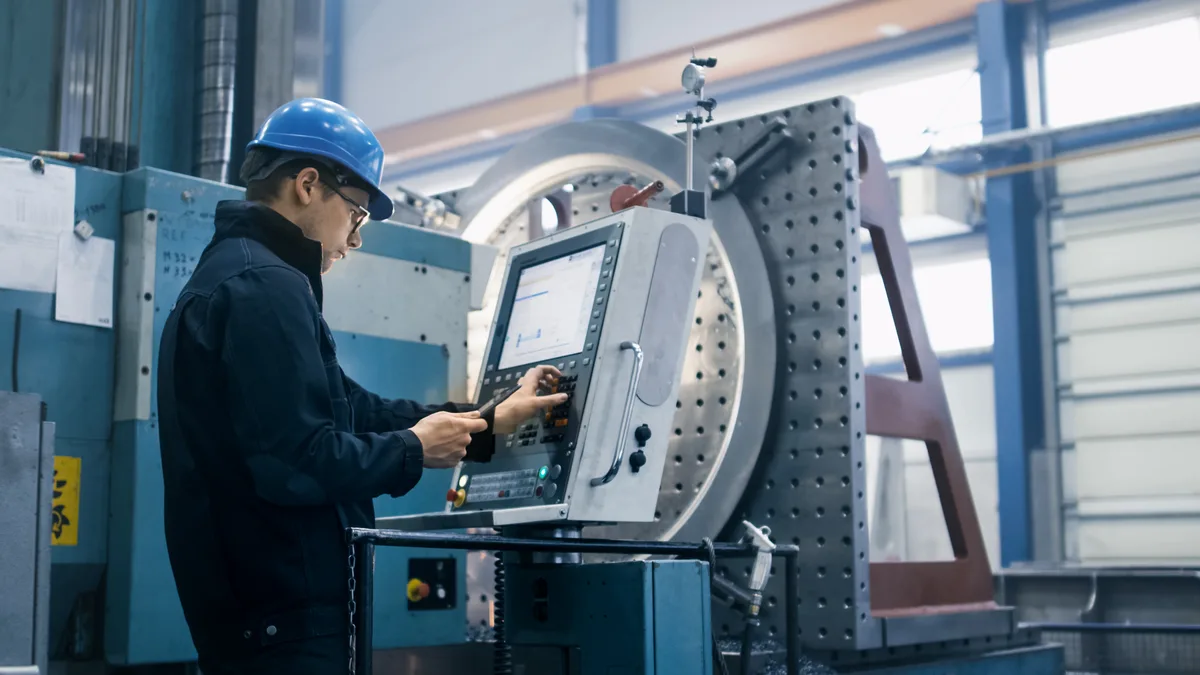
The December walk of the floor decides the T2
Taxable income in a job shop comes down to a subtraction: revenue minus cost of sales, and cost of sales depends on what the year-end jobs in process are worth. Under the Income Tax Act those half-finished jobs are inventory, valued at the lower of cost and fair market value. Get that figure loose and every line below it on the return is loose too.
Cost has to carry more than bar stock. Material issued to the job, the machinist hours clocked against it and the heat-treat and plating invoices it has already collected all belong in the number, and the CRA accepts either direct costing or full absorption costing to build it, provided the shop applies one method consistently. There is relief inside the rule as well: a fixed-price job already known to be underwater at year-end can be written down to fair market value, which puts the loss in the year of the bad quote rather than the year the parts ship.
Tooling deducts faster than the software default
Bookkeeping software files most shop assets into Class 8 at 20 percent, and for durable tooling that default leaves money on the table. The regulations put dies, jigs, patterns and moulds into Class 12 at a 100 percent rate, and any tool or gauge costing under $500 lands there too. Inserts, endmills and taps consumed in production were never assets at all; they are job costs in the year they are used up.
In the crib these categories blur together. On the return they are five different treatments:
| What the shop bought | How the return should treat it |
|---|---|
| Inserts, endmills and taps consumed on jobs | A current job cost in the year used, never capitalized |
| A tool or gauge under $500 | Class 12, deductible in full |
| Dies, jigs, fixtures and moulds the shop keeps | Class 12 at 100 percent, not Class 8 at 20 |
| A fixture built for and billed to the customer | A taxable sale with 13% HST; the build cost goes to the job, not to a CCA pool |
| The machining centre itself | Equipment CCA, with the class and first-year claim set by acquisition and in-service dates |
The customer-owned fixture line earns its emphasis. When an OEM pays for fixturing up front, that invoice is revenue in your hands and their asset on their books; shops that capitalize it instead understate sales and overstate their CCA pools in the same entry.
The apprentice on second shift carries a federal credit
General machinist and tool and die maker are Red Seal trades, which makes a registered apprentice in either one eligible for the federal Apprenticeship Job Creation Tax Credit: 10 percent of wages, to $2,000 per apprentice per year, through the first 24 months of the apprenticeship contract. It rides on the T2 as an investment tax credit on Schedule 31, and where the shop has no tax to absorb it, the credit carries back three years or forward twenty.
The evidence is paperwork the shop already holds: the training agreement registered with Skilled Trades Ontario and the payroll records behind the wages. Two apprentices through their first two years can be worth up to $8,000, a claim that goes missing whenever nobody connects the training agreement to the tax return.
One filing calendar for the corporation and its owners
Our Corporate Tax Filing engagements treat the T2, the HST returns and the owners' personal returns as one job, so the salary and dividends on the T1s reconcile to the corporate records that produced them. Job shops make lumpy years, one landed OEM program can double income, so we recheck instalments mid-year instead of letting CRA reminder notices set the pace.
Two flags round out the calendar. Refund-position HST returns after an equipment purchase tend to draw verification letters, which CRA Audit & Review Support answers from working papers rather than a scramble. And parts shipped to customers outside Canada are generally zero-rated, no HST charged, but only with proof-of-export records behind the rate, a detail worth settling before the first shipment. Whether the next machine should even land this fiscal year is a different question, and it lives on our machine shop tax planning page. We file for shops across Mississauga and the GTA, quoted in writing after a free 15-minute discovery call.
