
One booth quote, several different tax answers
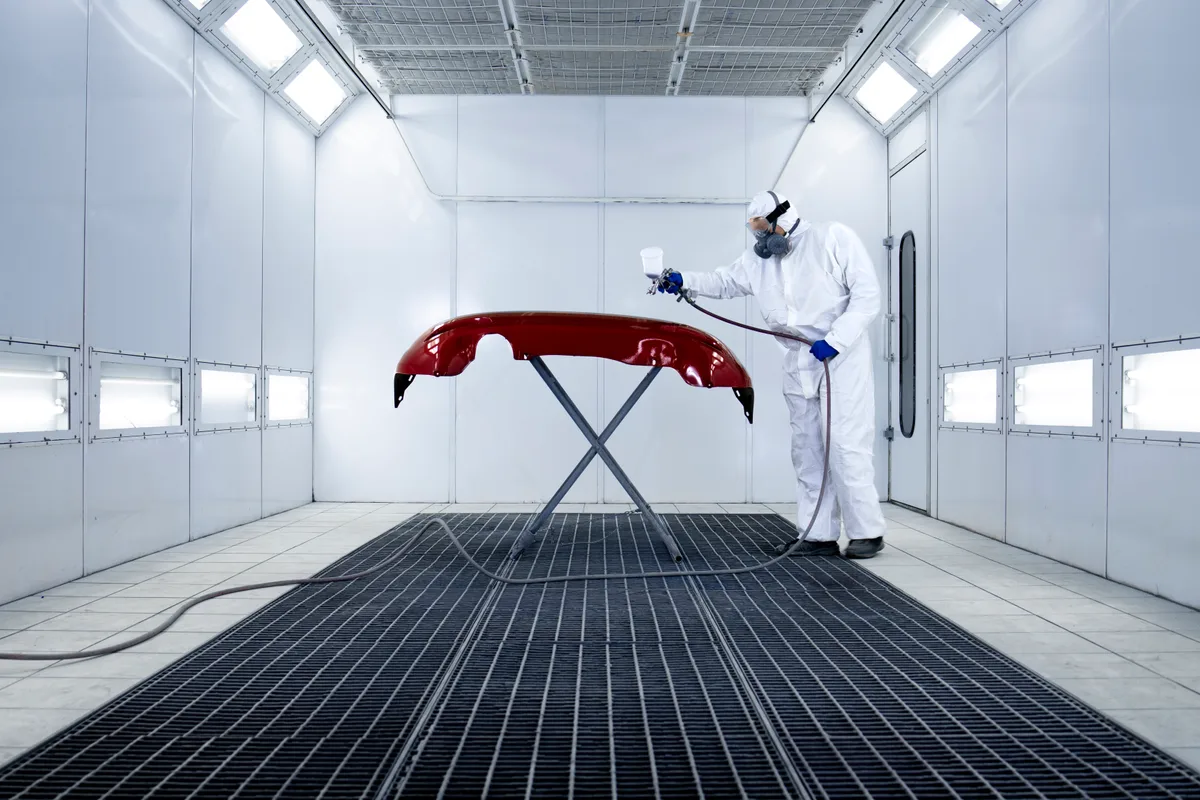
Sooner or later a quote for a downdraft booth, an air make-up unit and the installation lands on the desk, and it is rarely a small number. The plan starts by splitting that single project into pieces, because they do not depreciate together: the equipment sits in Class 8 at 20%, the building work anchoring it into a leased shop is Class 13 written off straight-line over the lease term, and the computers running measuring and mixing sit in Class 50 at 55%.
| Piece of the project | Treatment |
|---|---|
| Booth cabin, air make-up unit, frame machine, measuring system | Class 8 at 20%, with the full rate in year one while the accelerated investment rules run through 2027 |
| Ducting, ventilation, electrical upgrade and fire suppression built into a leased building | Class 13, straight-line over the lease term, so the renewal options you sign now set the write-off speed |
| Mixing-room computer and estimating workstations | Class 50 at 55%, the fastest claim in the shop |
| The loan behind all of it | Interest deductible as it accrues; CCA still runs on the full cost from day one |
Two timing rules pick the year. The claim starts when the booth is installed and spraying, not when the deposit cheque leaves, so a December order delivered in March claims nothing this year. And because CCA is optional annually, a discretionary claim can be held back for a year when profit runs past the $500,000 small business limit and every deduction offsets income taxed at 26.5% instead of roughly 12.2%.
Pay yourself like the payroll, not like the receivables
Insurer money arrives in waves, and owner pay copied off the deposit account inherits the waves. We set it the other way around: a steady salary sized to the household budget, run through payroll all year. Salary is deductible to the corporation, builds RRSP room and CPP entitlement, and reads well on the personal side when a booth loan or a mortgage application needs proving up. Dividends then act as the top-up, declared after a strong settlement stretch rather than promised ahead of one. The steady cheque also keeps source deductions predictable, one less thing to reconcile in a quarter when three insurers all decide to pay at once.
Profit that stays behind is taxed at roughly 12.2% on the first $500,000 in Ontario and becomes the deposit on the next machine. Dividends to a spouse or adult child are a share-structure question before they are a tax-return question, because TOSI taxes them at top rates unless an exclusion genuinely fits; the classes that make room for one are designed at the start, which is why our incorporation page comes before the first family dividend, not after it.
Instalments that survive a slow stretch
Once corporate tax payable passes $3,000, instalments run through the year, with HST's own schedule underneath. The collision-shop mistake is budgeting them evenly against revenue that is anything but even: a hailstorm or a hard winter fills the lot, a mild quarter empties it, and the instalment notice ignores both. Our fix is mechanical. A fixed percentage of every insurer settlement moves to a tax sub-account the day the deposit lands, so the instalment money is banked by the same wave of work that created the liability.
Choosing the base matters as much as paying on time. Instalments can follow last year's tax or a current-year estimate, and after an unusually strong year the prior-year base overshoots badly, lending the CRA cash the booth fund could be using. We reset the base deliberately, in writing, and after a weak year we do the reverse, because interest on shorted instalments is not deductible and buys nothing.
A calendar, not a scramble
Our Tax Planning & Advisory engagement runs on dates: an autumn session that prices the equipment decision while there is still a year-end to beat, sets the salary and dividend mix against what the year actually produced, and trues up instalments before the final quarter. Decisions leave the meeting with owners and dollar figures attached, then get executed inside the corporate filings instead of surviving only as a memo. When the booth needs a lender, Business Financing Advisory builds the application from the same numbers. The engagement is scoped in a free 15-minute discovery call with a written quote to follow, for collision shops across the GTA.
